
Melayani dunia
Telepon :+86-595-22963811
WhatsApp : +8615060951121
E-mail : yx05@blockmachine.cc

Tel : +86-595-22963811
E-mail : yx05@blockmachine.cc

At a building materials yard on the outskirts of Maputo, Mozambique, Mr. Paulo stands beside his QT8-15 block-making machine—a unit that has served him reliably for years. His gaze, however, is fixed on a series of photos on his smartphone screen: they show a Yixin QT6-15 machine undergoing testing at the factory. Equipped with a dual-layer feeding system, the machine is churning out interlocking paving stones with dense, smooth surfaces and crisp, well-defined edges. Paulo knows full well that construction sites across Mozambique and the broader Southern African region are proliferating rapidly; he realizes that his business can no longer rely solely on hollow blocks.
A Pivotal Decision: Moving Beyond the "Good Enough" Status Quo
Paulo’s existing QT8-15 machine came from a different supplier. It is a solid piece of equipment that has consistently produced hollow blocks and standard bricks, anchoring his supply network in and around Maputo. But the market has shifted. Industry research indicates that Mozambique’s construction sector, following a brief period of fluctuation, is back on a growth trajectory—with a projected real growth rate of 3.7% in 2026, and an anticipated average annual growth of 4.7% between 2027 and 2030. As infrastructure, energy, and housing projects gain momentum, the demand for paving materials has evolved: it is no longer just about having "any brick available," but rather about securing aesthetically pleasing, uniform, and easy-to-install paving solutions. Interlocking pavers are the primary beneficiaries of this shift. Paulo is receiving an increasing number of inquiries—not asking, "Do you have hollow blocks?" but rather, "Can you supply those interlocking pavers—the ones with consistent colors and precise dimensions?"
He has done the math: sticking exclusively to hollow blocks limits him to the basic wall-material segment of the market. In contrast, the paving and landscape-surfacing sector offers significantly higher profit margins and fosters greater customer loyalty. The problem, however, was that while his QT8-15 could theoretically produce certain types of paving stones by swapping molds, it fell short when it came to "dual-layer" production—the process of forming a distinct, colored top layer over a base layer. Clients in Southern Africa have high expectations for the appearance of paving stones; in competitive bidding, solid-colored, homogeneous blocks often lose out to those featuring a refined, uniform-colored top layer. He needed a machine specifically designed for dual-layer paving stone production.
Why the QT6-15? The Strategic Logic Behind Pallet Dimensions
After evaluating various equipment options, Paulo ultimately chose the Yixin QT6-15. Beyond the dual-layer technology itself, a key factor that swayed his decision was a detail often overlooked: the pallet dimensions.
The Yixin QT6-15 uses a 980×680 mm pallet—a specification chosen with pragmatic consideration for the climate and raw materials in Maputo. In the coastal region of Mozambique, where humidity is high, the concrete curing process is particularly sensitive. Pallets that are too large would mean a higher number of bricks per cycle and a heavier load of "green" (uncured) concrete, placing excessive demands on the rigidity of the pallets and the stability of the handling equipment. Conversely, pallets that are too small would hinder efficiency, as frequent pallet changes would lower overall output. The 980×680 mm size aligns perfectly with the operational rhythm of Paulo’s existing curing racks and forklifts; it ensures that the output per mold cycle is sufficient to cover costs, while preventing the excessive weight of the green concrete from increasing the risk of damage during transport.
More importantly, the dual-layer system integrated into this Yixin QT6-15 is far more sophisticated than a simple "add-on" hopper. The timing of the material feed and the vibration parameters for both the top layer and the base layer are independently controlled. This ensures strong bonding between the two layers while preventing the colored surface material from seeping too deeply into the base layer during vibration—a common issue that would otherwise cause the surface colors to appear washed out or indistinct. Yixin’s expertise in fine-tuning this system allowed Paulo to witness the production of a truly high-quality "faced paver"—one with a uniform colored top layer, a seamless bond with the base layer, and crisp, well-defined edges upon demolding. For the municipal paving projects he is pursuing in South Africa and Mozambique, this level of precision is the deciding factor in whether he can present a qualifying sample during the bidding process.
The Subtext of the South African Market: A Tiered Demand for Paving
Paulo’s vision extends well beyond Mozambique. While the South African construction market experiences fluctuations in overall investment, there is a steady rise in quality requirements for paving materials—both for infrastructure maintenance and private-sector developments. The South African paving market spans a wide spectrum, ranging from standard utility pavers to decorative interlocking blocks. Paulo’s strategy is clear: leverage the QT8-15 to maintain high-volume production of hollow blocks and standard bricks, securing his core business; simultaneously, use the QT6-15 to break into the more lucrative, higher-barrier-to-entry segment of interlocking pavers and dual-layer faced blocks. By running both machines, he can ensure consistent delivery for existing clients while offering a more versatile product mix to capture new, previously unattainable orders.
In his Maputo factory, space has already been set aside for the QT6-15. According to the technical specifications provided by Yixin, the machine features a molding cycle of 15 to 25 seconds. Its vibration frequency and excitation force are specifically calibrated for high-strength pavers, while the servo-hydraulic system—which delivers pressure only as needed—offers superior energy efficiency compared to traditional, continuously running hydraulic power units. For a building materials plant operating multiple shifts daily, electricity costs and maintenance expenses are significant, tangible factors—and with his extensive industry experience, Paulo is well aware of their impact.
Before Delivery
As the equipment undergoes its final pre-shipment inspection in China, Paulo has already organized training for his local operators. He has also sent a mold list to Yixin—in addition to standard rectangular interlocking molds, he has included a set designed for producing pavers with a stone-like, decorative surface finish. Construction projects in both Mozambique and South Africa are moving forward simultaneously. Paulo doesn’t want to wait until the machinery arrives to figure out what kind of bricks to produce; he needs to be ready to start brick production the moment the equipment lands, perfectly synchronized with the pace of his construction sites.
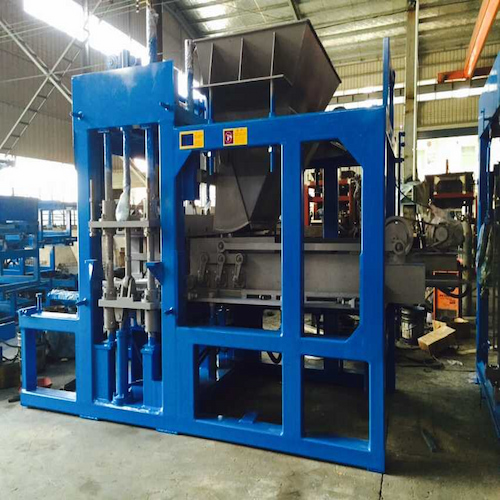
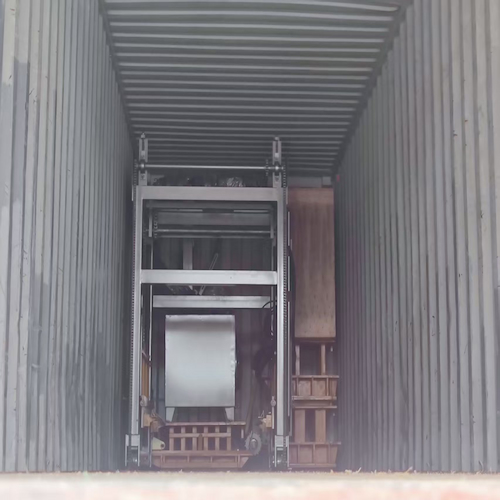
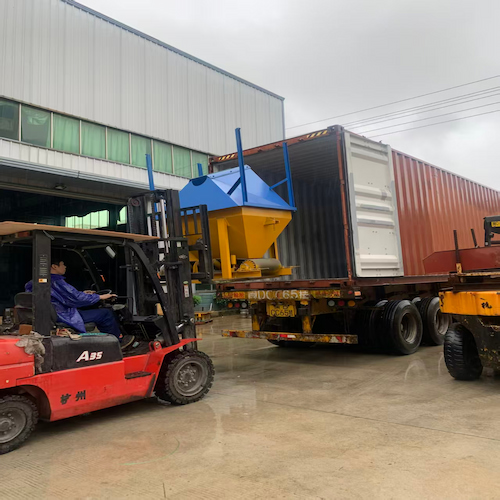
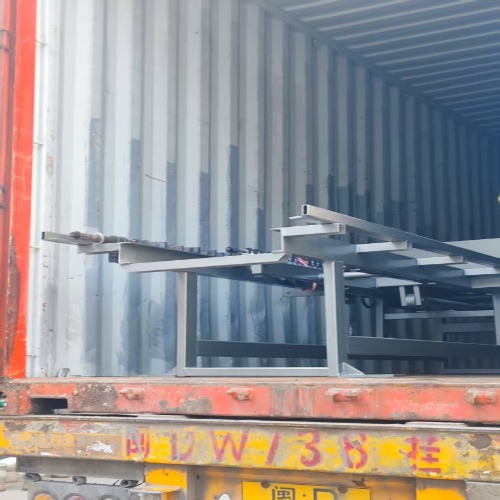
From his existing QT8-15 to the incoming QT6-15, Paulo’s business philosophy is straightforward: as the market evolves, his products must evolve with it. When evaluating whether a piece of equipment can help him keep pace with these shifts, he looks beyond the production capacity figures in a brochure. Instead, he focuses on practical concerns: do the pallet dimensions fit his site? Can the face-mix system produce high-quality samples? And, after a mold change, can the machine switch back to standard brick production by the very next day? The answers to these questions are currently en route to the Port of Maputo, arriving alongside that silver-and-blue QT6-15.
Production Video
Product Display
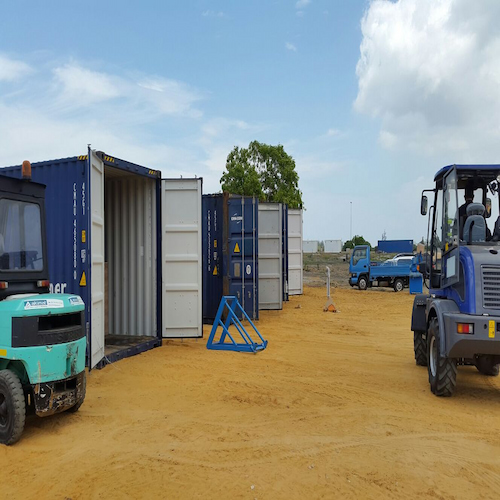
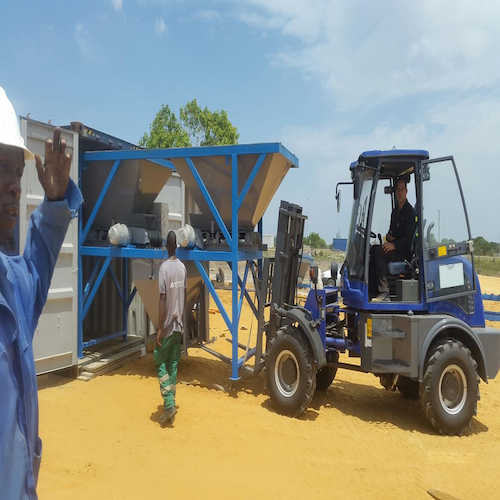
Packing Service
Tinggalkan pesan
Pindai ke WeChat :

Pindai untuk WhatsApp :